

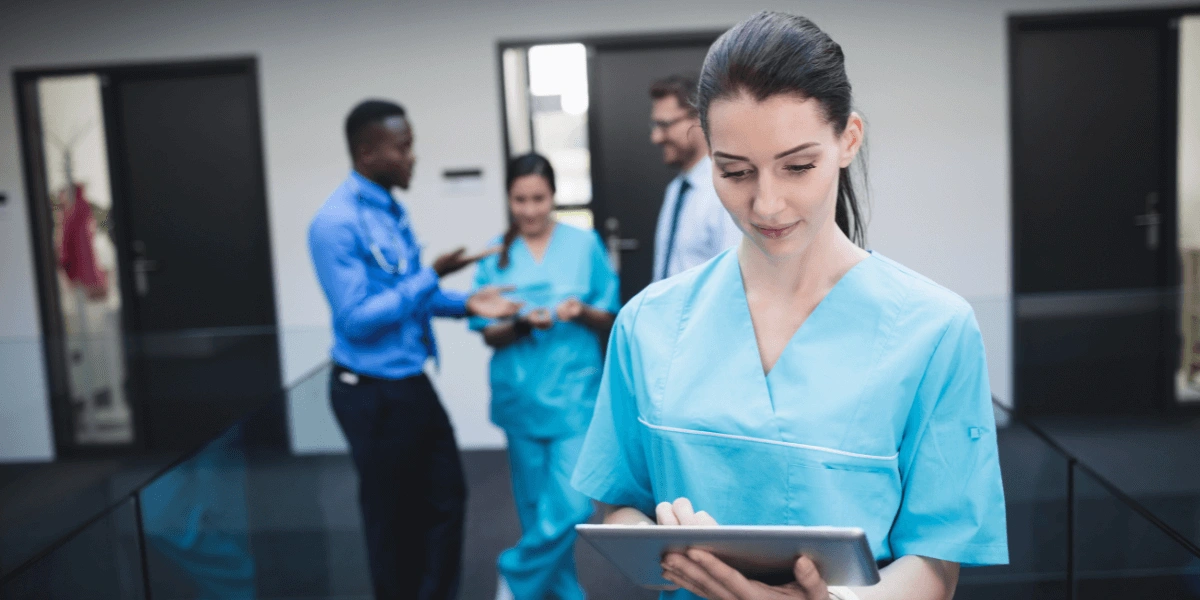
The German healthcare system enjoys an excellent reputation worldwide. It stands for precision, clear structures, high quality standards and strong social security. At the same time, the demand for qualified nursing staff has been growing continuously for years. In this environment, Germany has developed into one of the most attractive target markets for international nursing professionals. Nursing professions from Sri Lanka are increasingly becoming the focus of clinics, care facilities and professional recruiters.
Sri Lankan nurses are considered to be well-trained, committed and resilient. Many of them are looking for better working conditions, modern medical equipment and long-term professional stability. Germany offers precisely this combination - albeit under clearly defined conditions. This article provides a comprehensive overview of opportunities, requirements, salaries and everyday working life, specifically tailored to nurses from Sri Lanka and the facilities that recruit them.
Germany is in the midst of a demographic change. The proportion of the population over the age of 65 is rising rapidly, while at the same time many experienced nursing staff are leaving the profession due to age. Hospitals, nursing homes and outpatient services are feeling this pressure every day. The shortage of skilled staff is structural and long-term.
Current forecasts assume that by 2030 over 500,000 care places could be unfilled. This gap cannot be closed without international specialists. This is why Germany has created a targeted legal framework in recent years to attract qualified nursing staff from abroad. For Nursing professions from Sri Lanka this means real and long-term employment prospects in almost all areas of care - from acute clinics to long-term care.
German employers particularly value Sri Lankan nurses for their high patient orientation, their sense of responsibility and their solid basic training. The nursing principles and ethical standards have more in common with the German system than many applicants initially expect.
Nurses from Sri Lanka can apply for the following fields of activity, among others:
Healthcare and nursing
Basic and treatment care, administration of medication, assistance with ward rounds and medical procedures.
Pediatric nursing
Nursing and care of infants, children and adolescents in specialized departments.
Geriatric care
Care for the elderly, support with mobility, rehabilitation and chronic illnesses.
Intensive care
Care of critically ill patients in intensive care units (usually with additional qualifications).
Rehabilitation care
Accompanying patients after operations, accidents or serious illnesses.
All areas benefit from the clear structures, standardized processes and high level of technical equipment in the German healthcare system.
Entry into a nursing profession in Germany follows a clearly regulated procedure. The aim is to ensure that foreign qualifications are comparable with German standards.
The following requirements generally apply to nursing staff from Sri Lanka:
Completed nursing training
At least three years of full-time training in general nursing.
Professional license in Sri Lanka
Registration with the Sri Lanka Nursing Council.
Professional experience
Practical experience is advantageous, but career starters can also be admitted.
German language skills
At least language level B1 or B2, depending on the federal state and employer (Goethe, telc, ÖSD).
Certified translations
All certificates and documents must be translated into German by sworn translators.
Once the documents have been submitted, the competent recognition body of the respective federal state checks the equivalence. If differences are found, a Adaptation qualification or knowledge test be necessary. This process is transparent, but time-consuming.
Practical tip: Early and continuous language preparation in Sri Lanka significantly accelerates recognition, integration and professional success.
Everyday nursing care in Germany is demanding, but clearly regulated. Working hours are based on collective agreements and legal requirements. Nursing staff work in shifts with regulated rest periods.
Typical framework conditions:
| Aspect | Regulation |
|---|---|
| Weekly working hours | approx. 38-40 hours |
| Maximum working time | 48 hours per week |
| Shift models | Early, late and night shift |
| Breaks | At least 30 minutes per working day |
| Vacation | approx. 25-30 days per year |
| Surcharges | Night, weekend and public holiday bonuses |
Many employers also offer part-time models, reliable duty rosters and additional days off. The aim is to make the physical and mental strain manageable in the long term.
A key motivating factor is the financial perspective. A comparison shows clear differences between the two countries.
| Category | Sri Lanka (monthly) | Germany (monthly gross) |
|---|---|---|
| Starting salary | approx. 35,000-80,000 LKR | approx. 2.500-3.000 € |
| With professional experience | up to approx. 140,000 LKR | up to approx. 4,000 € |
| Special payments | low | Christmas/holiday bonus possible |
| Social benefits | Basic care | Pension, health and unemployment insurance |
| Vacation | limited | approx. 30 days |
In addition to the salary, the social security systems are a decisive advantage. Many nursing staff from Sri Lanka support their families financially and at the same time benefit from long-term security.
The career path is demanding, but easy to plan:
Find an employer or recruiting partner
Apply for recognition of training
Employment contract received
Apply for a visa at the German embassy in Colombo
Entry, adjustment phase and familiarization
Professional support significantly reduces errors, waiting times and uncertainty. For many nursing staff from Sri Lanka, external support is crucial for a successful start.
High job security
Family reunification possible
Clear career and further training prospects
Social recognition of the nursing profession
Living in a safe, multicultural environment
Bureaucratic processes
Initial language barriers
Cultural adaptation
Homesickness in the initial phase
However, with patience, good preparation and support, these challenges can be successfully overcome.
Germany offers nurses from Sri Lanka real, long-term prospects. Those who are prepared to integrate linguistically and culturally will find stable working conditions, fair pay and a wide range of development opportunities. At the same time, the German healthcare system benefits from dedicated professionals who guarantee the security and quality of care.
Organizations like TalentOrbit International GmbH play a central role in this. With structured recruitment, Recognition advice and visas- and integration services, they accompany nursing staff from Sri Lanka on their way to a sustainable professional future in Germany.