

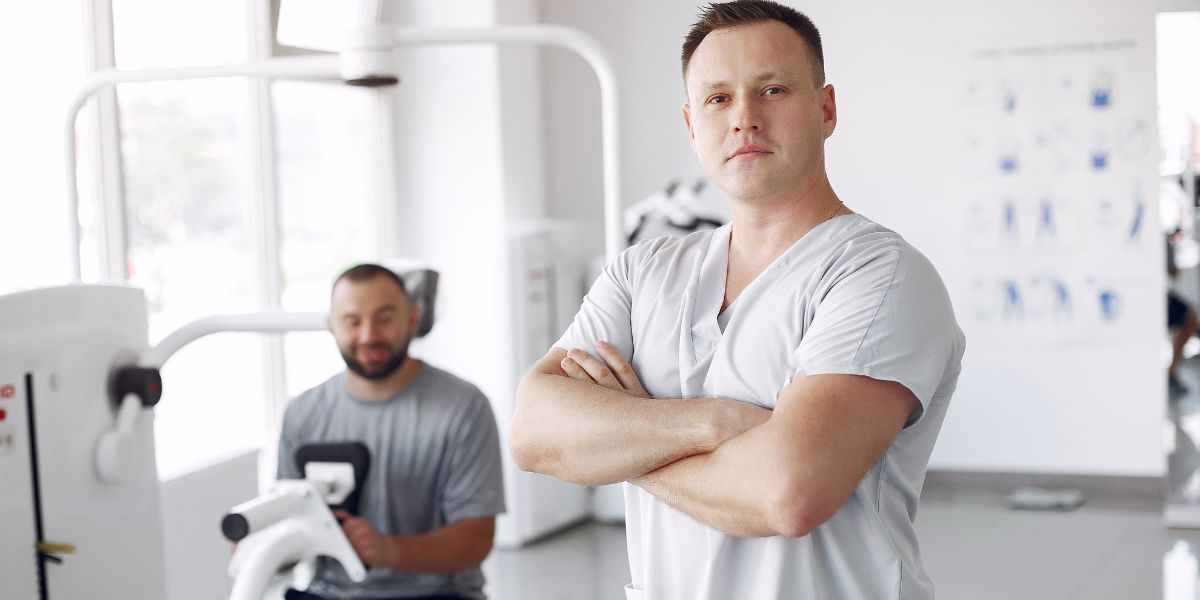
Let's imagine for a moment: In a German hospital, a nurse greets patients with a friendly smile - and a hearty "Xin chào". What's that all about? It's quite simple: More and more medical professionals from Vietnam are working in Germany. In times of acute nursing shortages - thousands of vacancies in clinics and nursing homes are unfilled - German facilities are also looking for staff abroad. Politicians are actively supporting this recruitment of foreign nursing staff. Among the countries of origin, Vietnam is particularly in the spotlight. But why Vietnam in particular? And how do Vietnamese doctors, nurses and other healthcare professionals manage to make the long journey from Hanoi or Ho Chi Minh City to German hospitals?
In this article, we take a closer look at what this topic is all about. What qualifications do Vietnamese professionals bring with them, what language hurdles do they have to overcome and what steps ultimately lead to Germany? It's not just about bureaucratic processes, but also about human stories, practical tips and the question of why the whole thing is of great benefit to both Vietnam and Germany. You can literally feel the spirit of optimism: this is about hope, about new opportunities - and about the bridge that language and education build between two countries.
You might ask yourself: Why Vietnam of all places? At first glance, Germany and Vietnam are far apart both geographically and culturally. But a closer look shows that a win-win situation can arise here. Germany is struggling with a drastic shortage of specialists in the healthcare sector - there is a lack of qualified nurses and doctors. At the same time, Vietnam trains many dedicated healthcare professionals every year, who do not always have the same career and salary prospects in their home country as they do in Germany.
A practical example: for some years now, there have been projects in which Vietnamese nursing staff are specifically recruited for deployment in Germany. Programs such as the state-run "Triple Win" or private initiatives show how well this can work. Vietnamese professionals are often young, motivated and professionally qualified - ideal prerequisites for getting started in German hospitals and care facilities. In addition, Vietnamese workers have a reputation for their willingness to learn and adaptability. Many of them see Germany as an opportunity to contribute their skills and at the same time help their own families in Vietnam by earning a good income.
Of course, history also plays a role: Vietnam has invested heavily in healthcare training in recent decades. Universities and nursing schools in Vietnam produce qualified graduates who can certainly keep up with international standards. For German clinics This means that skilled workers come here from another country but already have a solid foundation of knowledge and practical experience. What is still missing are basically two things: official recognition of the qualification and language skills - and we'll take care of that in a moment.
Now let's look at the formal qualifications. In Vietnam, medical professionals are trained to a high level. For example, many nursing staff complete a degree, often with a Bachelor of Nursing Science (BSN) at a medical university. Other professions such as physiotherapists or laboratory technicians also often have a sound education in Vietnam. But how is such a qualification treated in Germany?
Here comes the keyword Recognition comes into play. For a Vietnamese nurse to be allowed to work as a "nursing specialist" in Germany, her qualification must be officially recognized as equivalent. The German recognition procedure checks whether the knowledge and skills acquired abroad correspond to the local standard. If the training content is comparable, there is usually nothing to prevent recognition. In the event of deviations - for example, if certain specialist content was shorter in the Vietnamese training - recognition can be granted. Compensatory measure are required. This sounds complicated, but it simply means that the person either completes an adaptation qualification or takes an aptitude test to compensate for the differences.
A concrete example: A Vietnamese nurse with a Bachelor's degree applies for recognition in Germany. The competent authority - depending on the federal state, this could be a state office for nursing, for example - compares the course content. If only a few hours are missing in certain subjects, a short adaptation course may suffice. In other cases, the specialist must take an examination to show that they have the necessary knowledge. Professional recognition is only granted once equivalence has been established or successfully compensated forin other words, permission to officially practice the profession here.
Important to know: This procedure requires patience. It can take months from application to notification. In some successful projects, the process was very quick - there are cases where Vietnamese nursing staff received their recognition after just six months in Germany. But realistically, you should expect it to take around a year for everything to go through. The bureaucracy grinds hard, but in the end the effort is worth it: a recognized qualification is the foundation for a professional future in Germany.
In addition to professional recognition, the German language the second major milestone. Without German language skills, nothing works in the German healthcare system - after all, what good are the best professional qualifications if you can't communicate with patients and colleagues? For Vietnamese professionals, the language barrier is often the biggest challenge, but also the most important bridge to their new home country.
Most programs require candidates to learn German intensively in Vietnam. Nurses often start with a basic language course and progress to level B1 or B2 before they even get on the plane to Germany. The official requirement for nursing professions is usually at least level B2 of the Common European Framework of Reference for Languages. This corresponds to advanced knowledge - you can hold more complex conversations, even if you don't yet know every medical term. Doctors often have to meet even higher requirements, up to C1, as they have to communicate very precisely and provide medical information.
But language learning means more than just cramming grammar. Many Vietnamese professionals report that they not only learn vocabulary such as "taking blood pressure" or "changing dressings" in special courses, but also culture and tone. They practise how to speak empathetically to a German patient or how everyday working life on a ward works - from the morning "Good morning, how did you sleep?" to the evening handover meeting with the team. The language becomes a kind of toolbox that you need every day.
A nice image for this is language as a key: Learning German is like forging a key that unlocks door after door - be it the door to colleagues, communication with patients or successful examinations. There's no question that learning German is difficult at first. Sometimes it feels like climbing up a steep mountain and constantly dragging new words with you. But with every step you take, the view gets better: suddenly you understand your colleagues' jokes, can empathize with patients' relatives and notice how Germany no longer feels quite so foreign. That moment when a Vietnamese nurse can give information in German for the first time without hesitation is like reaching a summit - a sense of achievement that gives you courage.

It all sounds good in theory - but how does it actually work? Let's take a look Step by step the typical path of a Vietnamese skilled worker to Germany. Let's take the following example Linh25 years old, nurse from Hanoi. Linh dreams of working in an intensive care unit in Germany. What does she have to do?
Gain training and work experience in Vietnam: First, Linh completes her training in Vietnam. In her case, she has a bachelor's degree in nursing and has already worked for two years in a large hospital in Hanoi. This experience is important because German employers like to see that she already has practical experience. She also needs all certificates, documents and proof in translated form - this is the basis for the application for recognition later.
Learn German: Linh begins to learn German intensively while still in Vietnam. Every evening after her shift, she sits with her textbook and practises vocabulary. She attends a language course offered by the Goethe-Institut and reaches level B1 after a few months. But she knows that she needs B2 to work in Germany, ideally with technical language. So she keeps going, watches German videos, practises online with tandem partners and finally passes the B2 exam. A big milestone - the certificate in her pocket opens many doors for her.
Application and placement: Linh applies for a placement program with her documents and language certificate. Here, for example TalentOrbit comes into play - an initiative that brings Vietnamese talent together with German hospitals. The mediators arrange a video interview with a hospital in Germany. Linh is nervous, but her German is good enough to answer the questions and make a good impression. Shortly afterwards, she receives a confirmation: the hospital wants to hire her as soon as the formalities have been completed.
Start the recognition procedure: Even before Linh packs her bags, the recognition procedure is initiated in Germany. With the help of TalentOrbit and her future employer, she submits all the necessary documents to the relevant authorities. A few weeks later, she receives the decision: the Recognition of foreign qualifications leads to partial recognition in her case, but some specific content is missing (e.g. in geriatrics). This is not a problem - it just means that Linh will have to take part in an adaptation training course or pass a knowledge test after arriving in Germany.
Visa and entry: Linh applies for her visa with the notice of recognition and the employment contract. The magic word here is "Visa for the recognition of professional qualifications" in accordance with Section 16d of the Residence Act, as she will complete the recognition process in Germany. After a few nervous weeks of waiting, she finally holds the visa in her hands. It is hard to say goodbye to her family and friends, but the prospect of the adventure in Germany outweighs this. She gets on the plane - with mixed feelings of anticipation and excitement.
Arrival and adaptation course: When she arrives in Germany, Linh is warmly welcomed by the team. She initially works as a nursing assistant, as she is not yet fully recognized. At the same time, she starts the adaptation course organized by the hospital: A course lasting several months with theory and practice to iron out the final differences. Linh learns, for example, about German nursing documentation and specific legal topics that were not covered in depth during her training. She also uses the time to further improve her technical language.
Examination and professional recognition: After a few months, the time has come - Linh takes the knowledge test. She has studied hard and is delighted when she can easily answer the examiner's oral questions in German. A few weeks later, she holds the official certificate in her hands: Recognition granted! She is now on a par with a healthcare and nursing professional trained in Germany.
Career entry and integration: Now Linh can really get going. She gets a permanent contract as a recognized care worker. The beginning is nevertheless exciting: a new shift schedule, her first small apartment in Germany, dealing with the authorities for registration, bank account, health insurance - she masters all of this bit by bit. Her colleagues support her whenever communication problems arise. And after work? She talks to other Vietnamese colleagues, cooks Vietnamese food together or goes on excursions to get to know her new home. Step by step, a foreign country becomes a home.
Why does all this effort make sense? This shows that the recruitment of Vietnamese skilled workers brings benefits for both Germany and Vietnam:
Relief for the German healthcare system: Every additional nurse gained helps to close the care gap somewhat. Patients benefit because there are more staff, and overworked permanent staff are relieved.
Career opportunities and higher income for Vietnamese: New prospects are opening up for specialists from Vietnam in Germany. Salaries in the German healthcare sector are often significantly higher than in Vietnam. This allows many of them to support their families financially and advance their careers at the same time.
Cultural exchange and diversity: Vietnamese colleagues bring new ideas to German teams. Be it a different approach to care or simply the sharing of stories and traditions - diversity enriches the working atmosphere. Patients also encounter an international workforce, which has almost become a matter of course in a globalized world.
Partnership-based development: In the long term, such collaborations can also benefit Vietnam. Skilled workers who gain experience abroad build up valuable knowledge. Some may return one day and bring their know-how with them, while others stay and maintain connections back home. Both ways create an international network in the healthcare sector.
As you can see: It really is a mutually beneficial situation. Of course, everything has to be fair and ethical - nobody wants to simply poach the urgently needed skilled workers from Vietnam. But programs that provide sustainable training and do justice to both sides show how it can work.
Today, a year after she came to Germany, Linh is standing at a patient's bedside on the ward and explaining the next step in her treatment in German. Would she take the step again? A smile flits across her face at this question and she nods enthusiastically. "It wasn't always easy," she might say, "but it was worth it."
The path for medical professionals from Vietnam to Germany is undoubtedly paved with challenges - from language tests and paperwork to homesickness. But every challenge is also an opportunity to grow. With the right support, for example from programs such as TalentOrbit or committed employers, these talents can develop their full potential. In the end, everyone benefits: the professionals who realize their dream and start a secure professional future, the patients who receive good care, and the healthcare systems of both countries, which become stronger through exchange and cooperation.
This path is more than just a labor migration process. It is an exchange between cultures, a mutual learning and enrichment. And it shows how hope and energy can build bridges between countries. When you hear Linh's story, you can feel it: Someone has found their place here - far from home and yet they have arrived. Such stories are encouraging and show that human warmth and professional competence know no national borders. Especially Nursing staff from abroad prove how strangers become colleagues, challenges become success stories - and a dream becomes reality.